
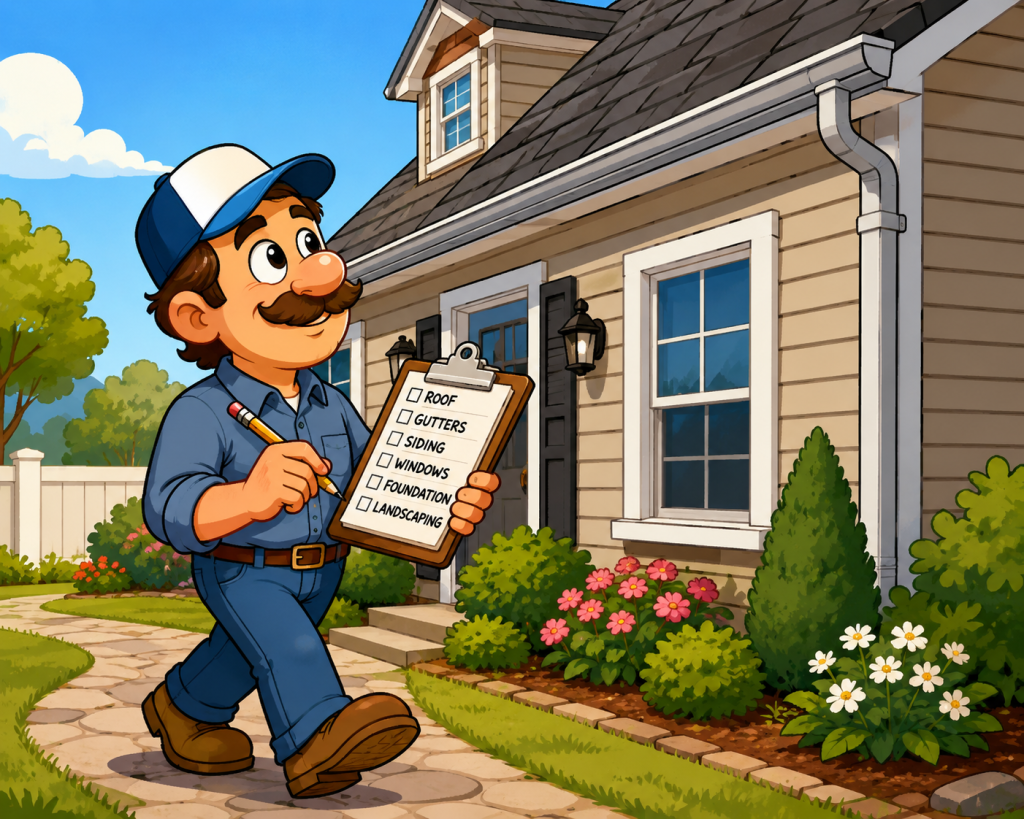
A quick walk around your home today could help prevent costly repairs tomorrow.
Summer is one of the best times of year to inspect your home’s exterior. After months of winter weather, spring rain, humidity, and seasonal storms, your home may have developed small issues that can quickly turn into expensive repairs if left unnoticed.
The good news? You don’t need special tools or a professional inspection to spot many common problems. In fact, a simple walk around your property can help you identify warning signs in less than 15 minutes.
Here’s what to look for during your summer home inspection.
1. Check Your Roof from the Ground
Your roof is your home’s first line of defense against the elements, and summer is the perfect time to identify potential issues before hurricane season and fall weather arrive.
Walk around your home and look for:
- Missing shingles
- Curling, cracked, or buckling shingles
- Dark streaks or algae growth
- Damaged flashing around chimneys, skylights, or vents
- Debris collecting in roof valleys
Your roof is your home’s first line of defense against the elements, and summer is the perfect time to identify potential issues before hurricane season and fall weather arrive.
Walk around your home and look for:
- Missing shingles
- Curling, cracked, or buckling shingles
- Dark streaks or algae growth
- Damaged flashing around chimneys, skylights, or vents
- Debris collecting in roof valleys
You don’t need to climb onto the roof. Many warning signs can be spotted safely from the ground. If you notice any of these issues it’s worth having a professional inspection performed before minor damage becomes a major leak.
2. Inspect Your Gutters and Downspouts
Gutters play a critical role in protecting your roof, siding, foundation, and landscaping by directing water away from your home.
Look for:
- Gutters pulling away from the house
- Sagging sections
- Water overflow stains
- Plants or debris growing inside the gutters
- Downspouts that discharge too close to the foundation
Even a partially clogged gutter can cause water to back up beneath roofing materials, potentially leading to rot, mold, and water damage.
3. Examine Your Siding
Your siding protects your home from moisture, pests, and weather-related damage. Small issues can quickly lead to costly repairs if moisture is allowed to penetrate behind the exterior surface.
As you walk around your home, look for:
- Cracks
- Loose or missing panels
- Warping or buckling
- Mold, mildew, or algae growth
- Fading or discoloration
Addressing siding issues early can help preserve your home’s appearance while preventing structural damage.
4. Evaluate Your Windows
Many homeowners overlook their windows when performing home maintenance, but aging or damaged windows can significantly impact comfort and energy efficiency.
Common signs it may be time to consider replacement windows include:
- Drafts near windows or doors
- Condensation or fogging between glass panes
- Windows that stick or are difficult to open
- Windows that won’t stay open or lock properly
- Increasing energy bills without another obvious cause
Modern energy-efficient windows can help reduce heating and cooling costs, improve indoor comfort, enhance curb appeal, and protect your home from moisture intrusion.
5. Take a Look Inside the Attic
Your attic plays a major role in the health and longevity of your roofing system.
Check for:
- Excessive heat buildup
- Moisture or condensation
- Mold growth
- Musty odors
Signs of inadequate ventilation
Proper attic ventilation helps extend the life of your roof, reduce energy costs, and prevent moisture-related damage that can affect the entire home.
6. Check Drainage Around Your Foundation
Water should always move away from your home—not toward it.
- Walk around your foundation and look for:
- Standing water after rainstorms
- Soil erosion
- Areas where soil has settled near the foundation
- Downspouts that discharge water too close to the house
Poor drainage can lead to foundation issues, basement moisture problems, and costly structural repairs if not addressed promptly.
Why Summer Inspections Matter
Many of the most expensive home repairs begin as small, easily overlooked issues. A missing shingle, clogged gutter, or minor siding crack may seem insignificant today but can lead to major repairs if left unattended.